Tools / 2 MIN READ
The things that earn their space
Before buying another travel gadget, give it a job description.
The same job can call for a different tool
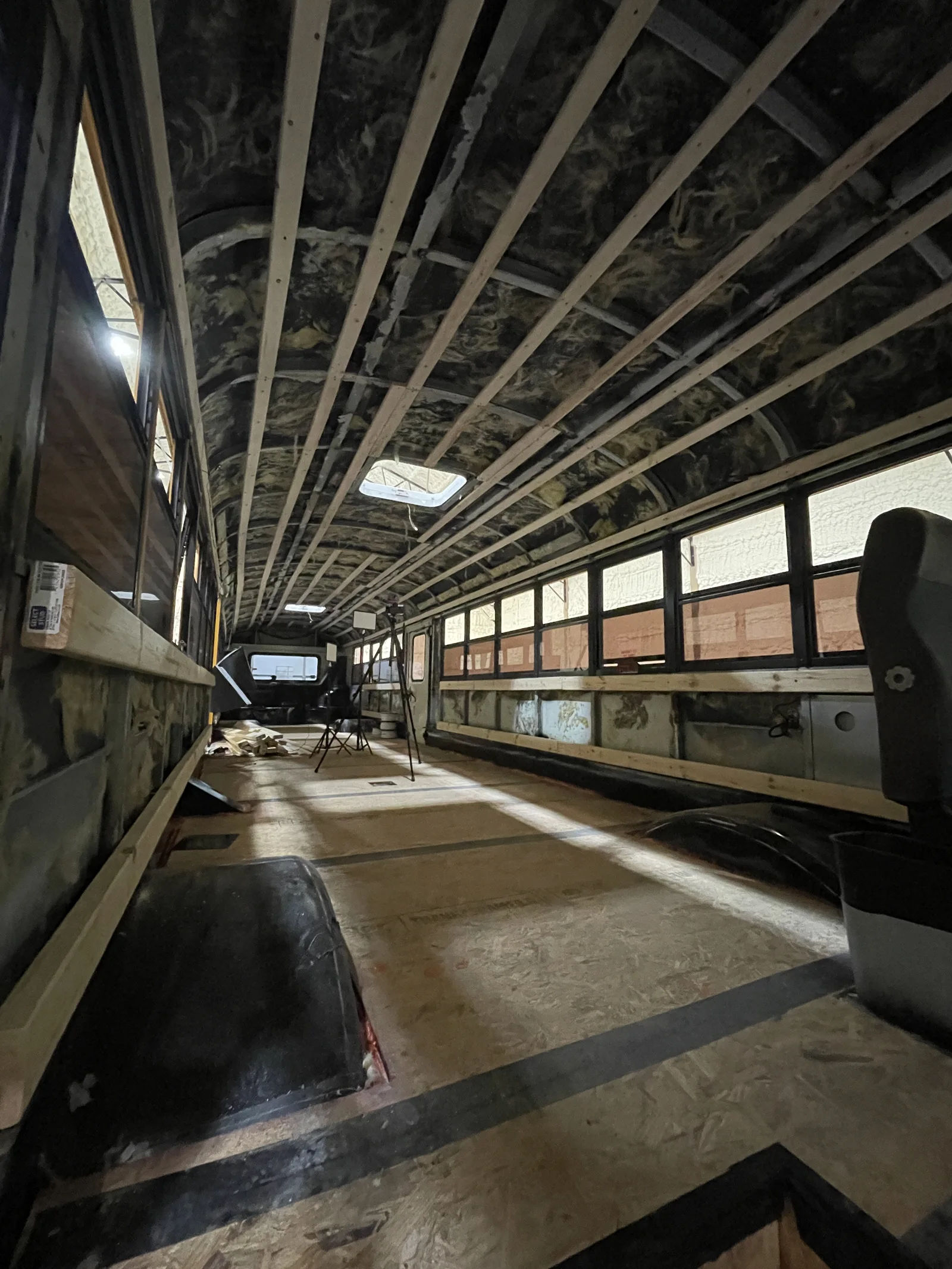
We painted our first bus Cascade Green with an airless sprayer. It was quick, and we liked how the color sat in the places we traveled. By the time we painted the IC in 2024, Chase had more experience with automotive spray guns and wanted to take that approach for the finish.
The second time, we also wanted a much lighter color. Looking back at the build photos, the change is obvious, even if the pale paint looks white in some of them. A different bus, a different finish, and more experience behind the choice.
That is how we like to think about tools: in relation to a particular job. Something can be a good choice for the first project without being the tool you choose forever. Experience gives you a better sense of which tradeoffs matter to you.
What problem is it solving?
Small-space living makes every object a little more noticeable. You see it, store it, move it, and eventually have to decide whether it deserves to come along. That can be a helpful filter for shopping.
Before adding something, name the problem in plain language. Not “this looks useful.” Something specific: this task is awkward, this item is difficult to store, or this daily routine takes more steps than it needs to. If the problem is hard to name, the purchase can probably wait.
Think about the whole object
An item’s footprint includes more than its dimensions. There may be chargers, accessories, cleaning, replacement parts, and a place it needs to dry. A compact product that requires three other things can take up more room in your life than it first appears to.
We’d compare how often something will be used with how much effort it takes to own. Easy to clean, easy to put away, and easy to understand are quietly valuable qualities. They rarely make the most exciting product description, but they matter on an ordinary day.
Start with what you already have
Try the routine before buying the solution. Sometimes moving an existing item or changing where it lives does more than adding something new. Sometimes you discover that the problem really does deserve a dedicated tool.
There’s no universal packing list for a moving home. The right choices depend on how you cook, work, travel, and spend time together. Our tours show the spaces those choices have to fit into. Use that as a prompt to think about your own routines. A useful collection of gear should feel like support for your life, not another project to manage.