Lessons / 2 MIN READ
The next build starts with better questions
A useful way to think about what you’d change, without pretending the first version was wasted.
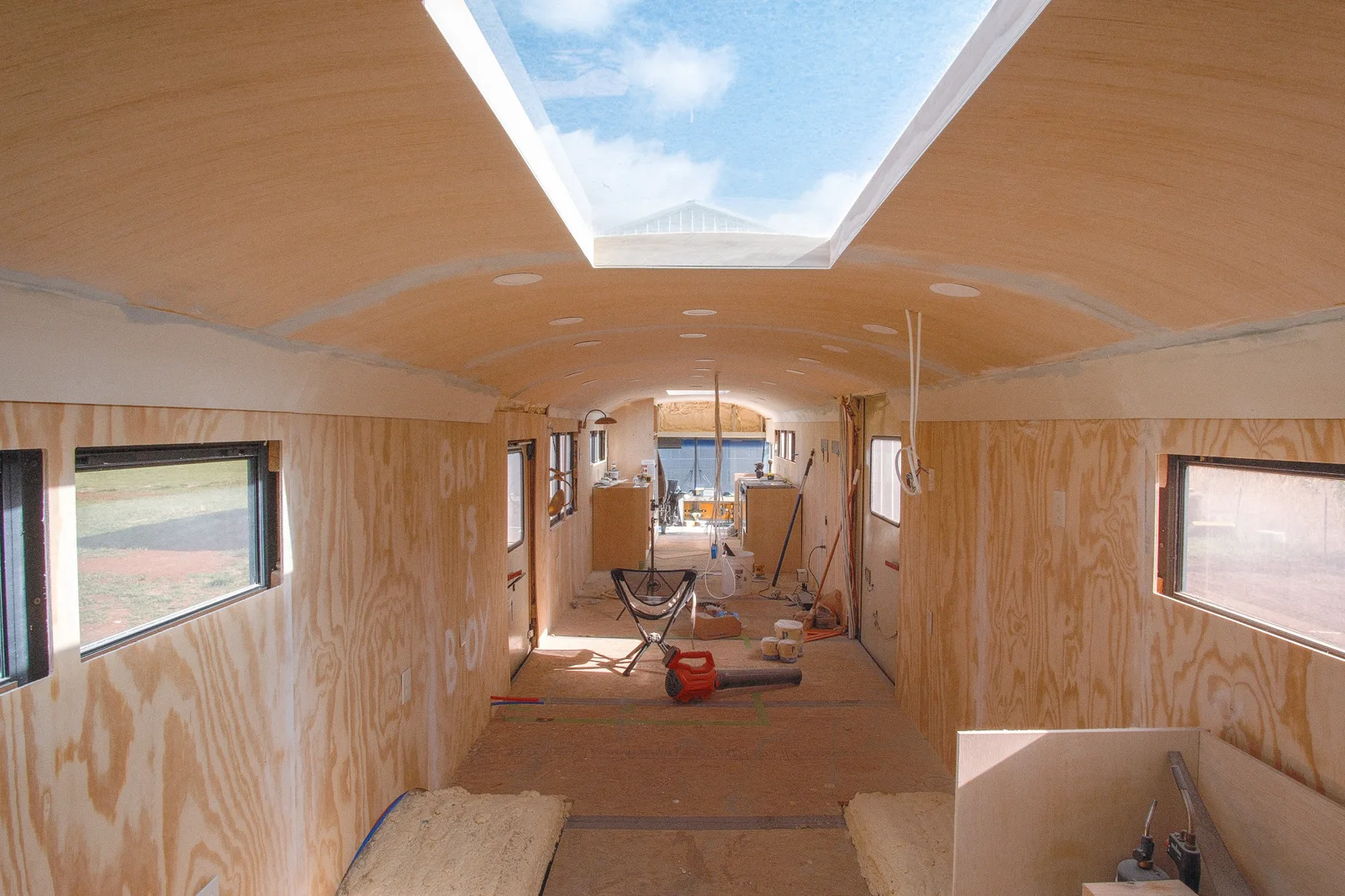
We didn’t automatically repeat the roof deck
When we were planning our next bus in 2023, a roof deck was still a question. We had enjoyed the one on Tío, but that didn’t settle whether another one belonged on the IC. We were weighing how much we would actually use it, alongside questions about a roof raise and a possible rack.
That is a useful distinction when you’ve built something before. You can like a feature and still question whether it earns its place in the next version. The earlier build gives you experience to draw on, not a list you have to copy.
Our family’s needs were changing too. The new plan included space for our daughter, and the kind of travel we imagined was different. Before repeating a favorite feature, we’d ask what it would contribute to this version of our life.
Keep the evidence
Looking back at a finished build, it’s easy to focus on the thing you would do differently. A detail you’d move. A material you’d reconsider. A process that could have been clearer. That reflection is useful, but it works best when it’s specific.
Instead of writing “better storage,” write down what was difficult to store and when you needed it. Instead of “different layout,” describe the moment the layout got in the way. A precise observation gives the next version somewhere to begin.
Distinguish a mistake from a changed need
Something can work well for one chapter and become inconvenient in another. That doesn’t automatically make the original decision wrong. A change in work, travel pace, or family life can change what a home needs to do.
We’d separate those two kinds of notes: what we understand better now, and what we genuinely need differently now. It makes the next plan more thoughtful, and it gives the earlier one a little credit for the life it supported.
Keep the parts that quietly worked
The most irritating detail often gets the most attention. Make a second list for the things that did their job without much fuss. Easy access. A comfortable place to sit. Something that cleaned up well. Those are decisions worth carrying forward, even if they never became the star of a tour.
A new build doesn’t have to be an argument against the previous one. It can be a continuation of the same curiosity. Our timelapses show the visible transformation, but the questions behind the work keep changing too. That’s part of why we keep making things: there’s always another way to understand the space, and another chance to make it work a little better.