Building / 3 MIN READ
Before the first cut: questions for your bus build
The questions worth sitting with before a school bus becomes a construction project.
Our first bus started with a very big leap
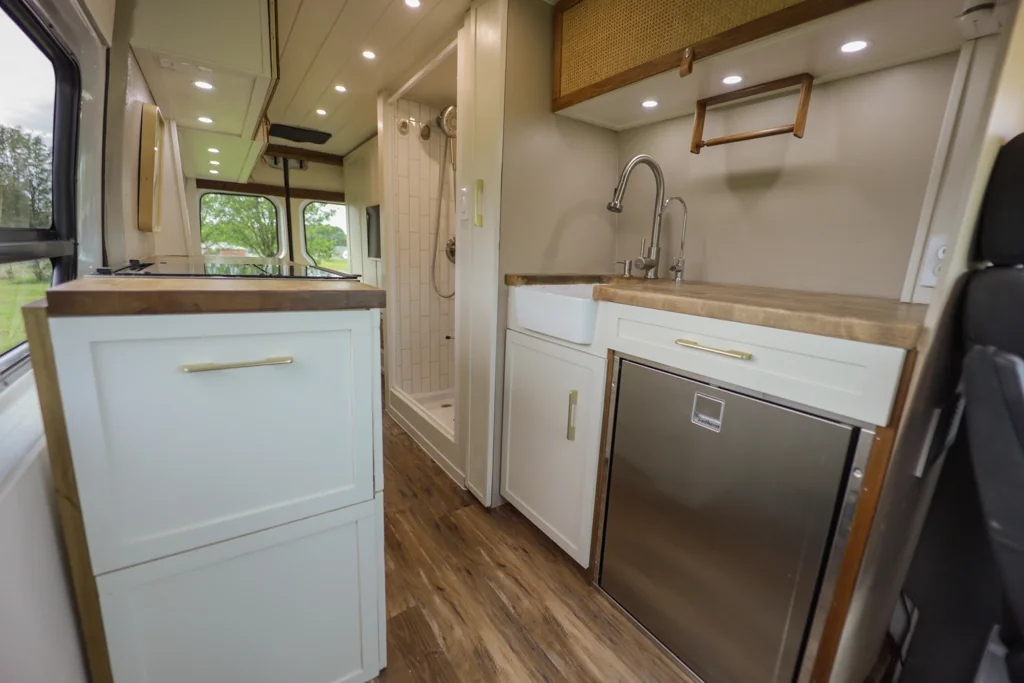
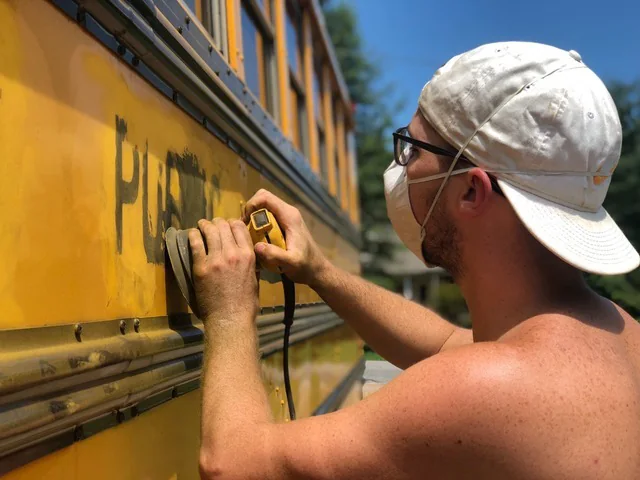
In 2018, after Chase lost his job, we bought a 40-foot Thomas MVP Saf-T-Liner that had been a Nashville Metro school bus. We named it Tío Aventura. Four months of building outside later, we had turned it into our home, sold our house and belongings, and headed out.
We weren’t arriving with a long résumé of renovations. Before the bus, Chase’s biggest home project had been replacing outlets with ones that had USB chargers. There was a lot to learn between that and building a moving home. That is part of why we like sharing the process: the finished space can hide just how new all of this once was to us.
Tío carried us through two years of travel. Looking back, the question before that first build wasn’t just where to put the kitchen. It was what kind of life we were trying to make room for. The layout came after that.
Start with what you want it to do
We’ve turned a school bus into a home. There’s something wonderful about looking down that long aisle and imagining an entirely different life inside it. There’s also an awful lot of room for decisions to multiply.
Before the build takes over, describe the life the bus needs to support. How many people will use it? Will you work inside? What needs privacy? What will you do on a day when going outside isn’t appealing? Those answers are more useful than a collection of beautiful cabinets.
Separate the decisions
Some decisions affect almost everything that comes after them. Others can wait. It helps to distinguish the structure and systems from the finishes, and to understand which choices depend on earlier work.
A paint color can usually be revisited more easily than the location of a major component. Before covering anything up, understand how it will be inspected, serviced, or replaced. When a task involves vehicle structure, gas, electricity, or other safety-critical work, bring in the right qualified help. A video can show a process; it can’t inspect your particular bus.
Make room for learning
A first build is also a long education. You’re figuring out materials, tools, sequencing, and your own tolerance for unfinished things at the same time. We’d make the plan visible: what’s next, what’s waiting on a decision, and what you need to learn before proceeding.
Keep a record of the work as you go. Photos before a wall closes up, notes about a part, and a clear list of unresolved questions are more useful than trying to remember everything later. There’s no prize for holding the entire project in your head.
Our school bus timelapse gives you the sweep of a transformation. The part to remember is that a timelapse compresses the pauses along with the progress. Let your actual build have the time and attention it needs.
Keep a decision record
Give each major decision a short entry: what we need, the options we considered, why we chose this one, and what still needs checking. Add the date and the photos or measurements that informed it.
Make a separate list of decisions that affect later work. Before closing a wall or fixing something permanently, check that the next step can still happen and that service access has not disappeared.
The point is to make the project easier to understand when you return to it tomorrow. A short note written while the detail is fresh can save a surprisingly long conversation later.