Building / 2 MIN READ
A Murphy bed gives you space. It also asks something of you.
The useful question isn’t whether a transforming layout is clever. It’s whether you’ll enjoy using it.
One room, more than one job
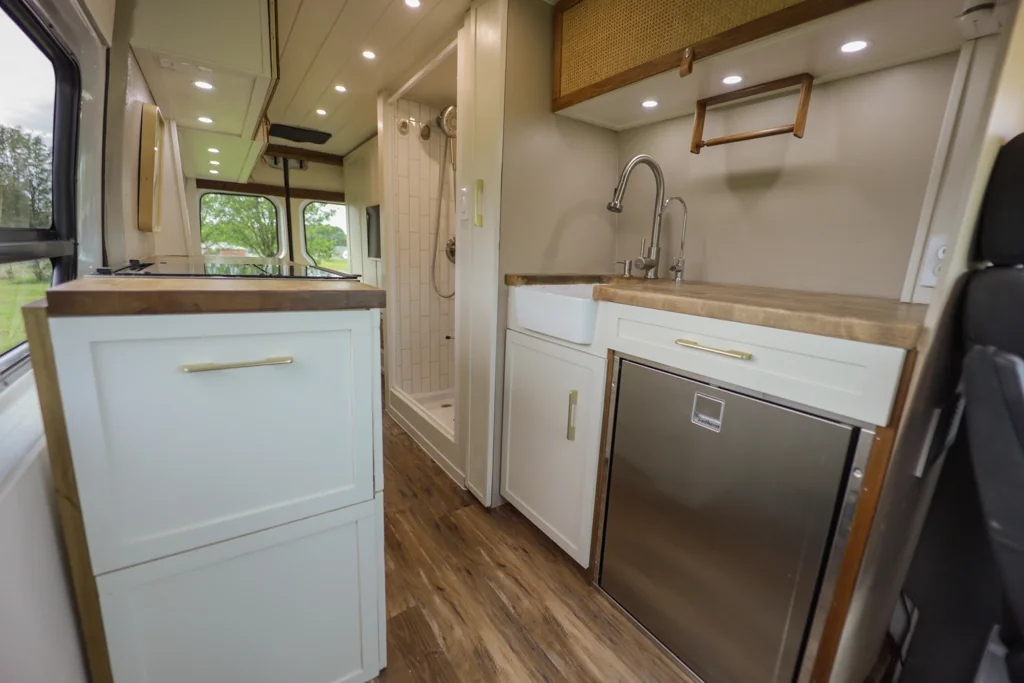
Our van has a Murphy bed, and that makes it a good place to start a conversation about flexible layouts. Watching a bed disappear into a wall is satisfying. But the movement itself is only a small part of the design.
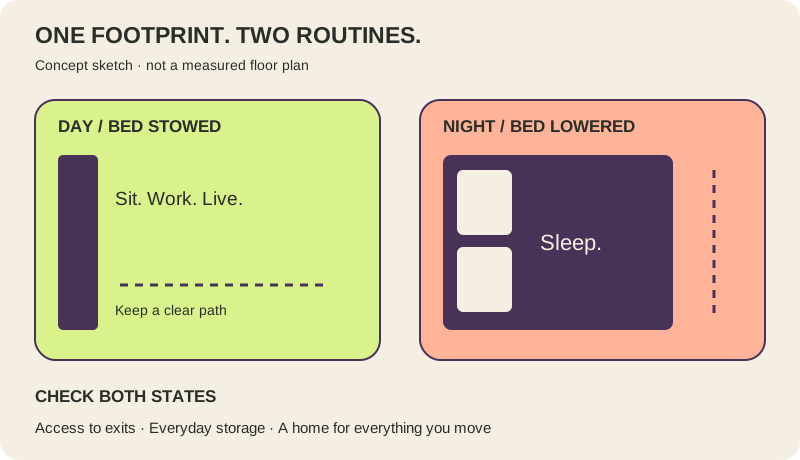
The real question is what the room becomes afterward. Does putting the bed away create a genuinely useful place to sit, work, or spend time together? Or does it mostly create a patch of floor? Both can have value. We’d just want to know what we’re gaining before committing to the mechanism and the cabinetry around it.
Count the steps between one use and the next
If you’re considering a transforming space, write down the entire changeover. Where do the pillows go? What has to come off the table? Is there anything on the floor that needs moving? Can one person make the change comfortably?
Then consider the reverse. A daytime room that looks wonderful shouldn’t make bedtime feel like closing down a restaurant. The best version of this idea is one you’ll actually use, even when you’re tired.
Compare it with a fixed bed honestly
A fixed bed has a very appealing quality: it is already a bed. It can also provide storage underneath. A folding bed gives the same footprint another job, but adds a daily action and a system that needs thoughtful installation and maintenance.
We don’t think either choice wins for everyone. Think about whether you keep similar hours, how much time you spend indoors, and what you need from that room during the day. If the extra living space solves a real problem, the changeover may be an easy trade. If you mostly want to come home and fall into bed, listen to that too. Watch our tour to see the arrangement in context, with the rest of the van around it.
A simple changeover test
Make a two-column list: daytime and bedtime. Under each, write what must stay accessible. Include the fridge, bathroom, exit, everyday storage, and any place another person needs to use.
Now trace every step between the two states. If a cushion, table, bag, or pet bed has to move, give it a destination. “Somewhere else” is not storage.
Compare that routine with a fixed-bed option using the same priorities. Which version gives you more of what you need, and which inconvenience would you rather live with? That answer matters more than which transformation looks better on camera.